
Dr. Babasaheb Ambedkar: A Scholar in London
3/3/20262 min read
The Journey of Education
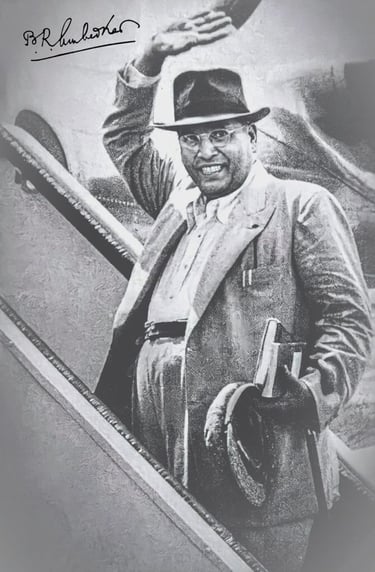
Dr. Bhimrao Ramji Ambedkar, widely known as Dr. Babasaheb Ambedkar, is celebrated as the principal architect of the Indian Constitution and a prominent social reformer. His educational journey, especially in London, played a pivotal role in shaping his ideologies and his lifelong commitment to the upliftment of the marginalized communities in India. Ambedkar's time in London not only marked significant academic accomplishments but also laid the groundwork for his future activism.
Academic Achievements in London
In 1916, Dr. Ambedkar traveled to London to pursue higher education at the London School of Economics (LSE), where he studied under the guidance of esteemed economist, Professor Edwin Cannan. He earned his Master’s degree in 1921, focusing on the area of Economics. His thesis, titled “The Problem of the Rupee: Its Origin and Its Solution,” showcased his analytical capabilities and understanding of economic principles. Ambedkar's time in London also saw him enroll in Gray's Inn to study law, where he was called to the bar in 1922. This comprehensive education enabled him to gain insights that would later influence his approaches to social justice and constitutional law.
Influence of London on his Philosophy
The exposure to diverse cultures and ideas during his stay in London significantly impacted Dr. Ambedkar's worldview. The academic rigor and the intellectual debates at the LSE enriched his thought process, guiding him towards radical ideas about equality and human rights. The interactions with fellow students and professors allowed Ambedkar to refine his theories on social equity and economic reforms. It was during this period that he solidified his resolve to advocate for the marginalised, further motivating him to dismantle the deeply entrenched caste system upon his return to India.
In summary, Dr. Babasaheb Ambedkar's education in London was not just a mere academic endeavor; it was a transformative phase that equipped him with the necessary tools to challenge socio-political injustices. His remarkable journey highlights the importance of higher education in shaping effective leaders capable of initiating substantial change. The knowledge and experiences he accrued during his time abroad became the cornerstone of his later achievements, affirming the indelible mark he left on Indian society and beyond.